Hugelkultur is an ancient gardening technique that turns
logs, branches, leaves, and other organic matter into a raised, self‑fertilizing
garden bed. The phrase is German and translates to “mound culture” or “hill
culture.” Piling up wood, covering it with soil, and planting crops on top
sounds simple, but the results can be impressive. That’s because hugelkultur
improves soil health, conserves water, recycles plant waste, and creates
long-lasting, nutrient-rich growing spaces.
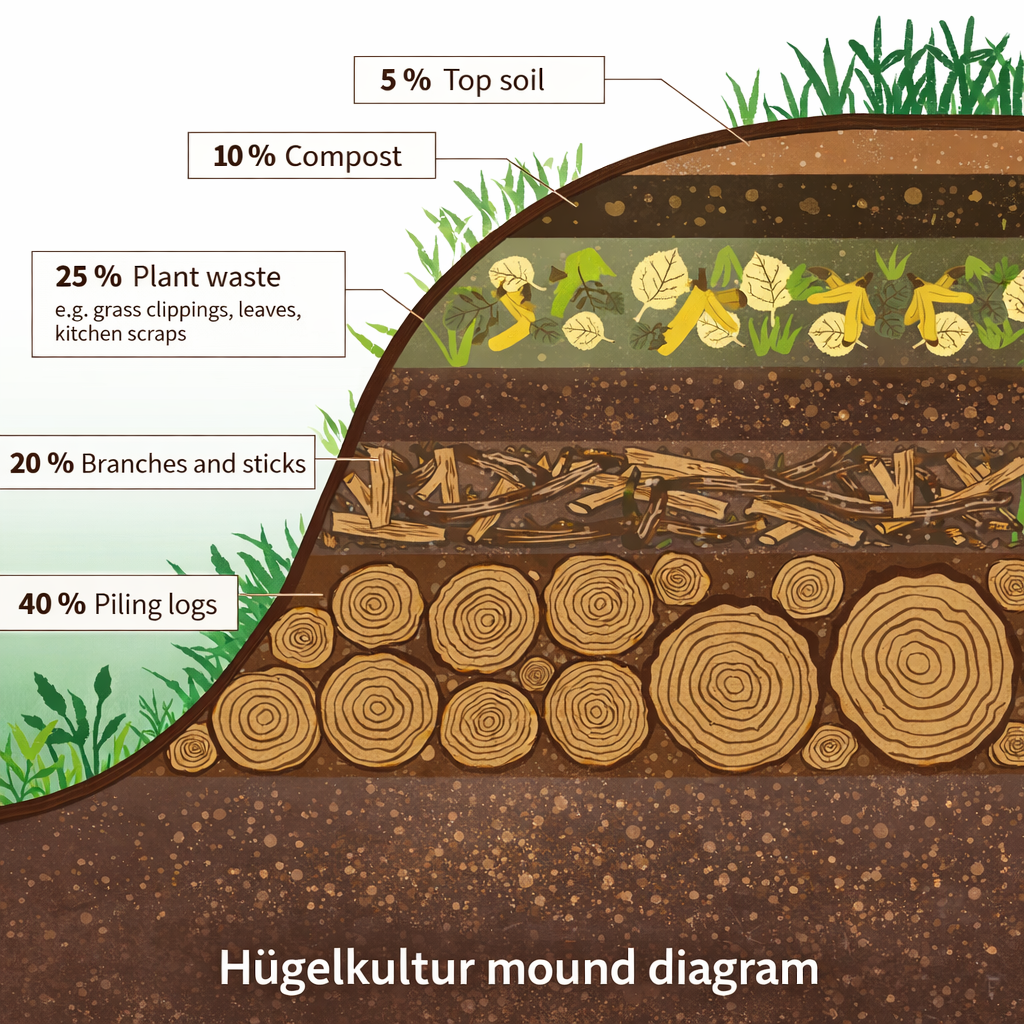
Cross-section of a hugelkultur mound. Image credit: Science Mill
What’s the Basic Concept?
Hugelkultur mimics the natural process of a forest floor. In the woods, fallen logs slowly decompose and create pockets of moisture, nutrients, and microbial life. Plants thrive in this environment without human intervention. Hugelkultur brings that same dynamic into the farm or garden, but it can also include items like grass clippings, rotten hay bales, and manure.
Hugelkltur typically includes:
Large logs or branches as the foundation
Smaller sticks and twigs layered on top
Grass clippings, leaves, compost, or manure to fill gaps
A final layer of topsoil for planting
What are the Benefits?
Hugelkultur has become increasingly popular because it solves several common challenges at once. For example, as the wood decomposes, it acts like a sponge. In other words, it absorbs water during rainy periods and slowly releases it during dry spells. Gardeners report that hugelkulutr beds require significantly less watering, but that’s not the only benefit.
The decaying wood in a hugelkultur mound provides a slow, steady release of nutrients. This creates a self-fertilizing system that can remain productive for years without heavy inputs of soil amendments or fertilizer. Plus, because hugelkultur beds become loose, aerated, and rich in organic matter, this helps roots grow deeply while reducing soil compaction.
Hugelkultur beds also give landowners a better waste to recycle yard waste. Instead of burning or hauling away logs, branches, and leaves, farmers and gardeners can turn them into a raised bed. The breakdown of organic matter takes time, but the mound provides a raised surface for improved drainage and less bending over while planting or harvesting.
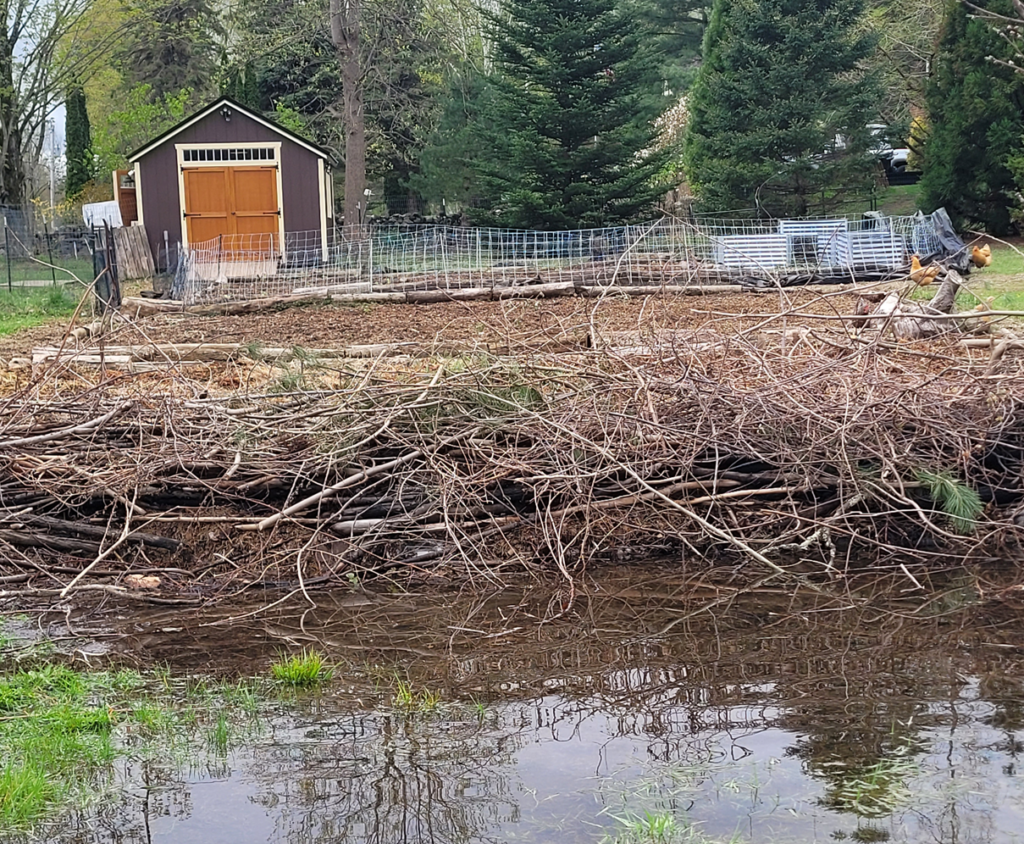
This hugelkultur mound still needs topsoil, but it's already helping by both absorbing and holding back excessive groundwater. Image Credit: Cole Mountain Farm
What Can You Grow?
Most vegetables, herbs, and flowers thrive in hugelkultur beds. Popular choices include squash and pumpkins, beans, peppers, tomatoes, perennial herbs, and flowers for pollinators like bees and butterflies. Plants that prefer well-drained, nutrient-rich soil tend to perform especially well. That leaves out carrots, parsnips, and radishes, which tend to produce excessive leaves in rich soils.
What Wood Should You Use?
Not all wood is ideal. Softwoods like pine, spruce, fir, and birch work well because they break down at a moderate pace. Hardwoods like oak or maple last longer but will still decompose. Avoid pressure-treated wood that can leach chemicals, and don’t use logs or branches from these trees:
Black walnut contains juglone, which is toxic to many plants
Black locust is extremely rot‑resistant
Cedar and redwood are slow to decompose
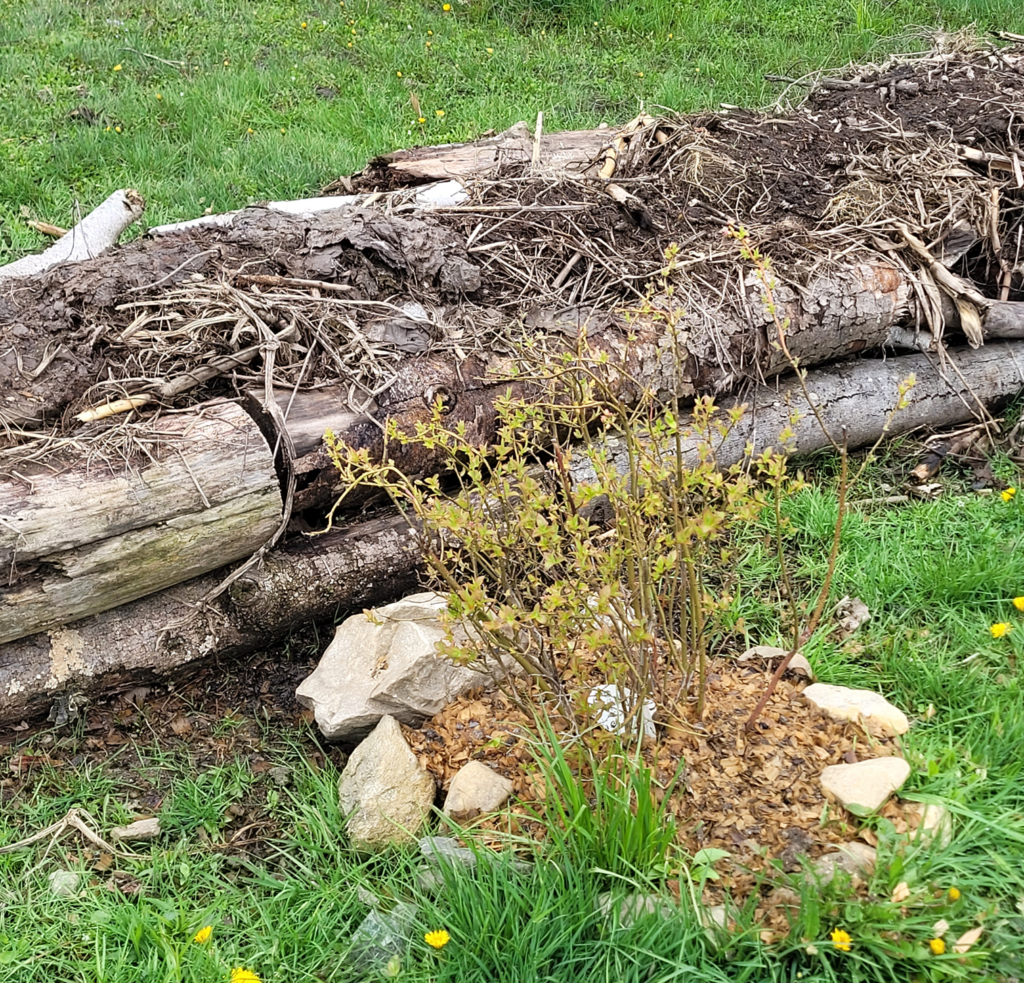
When finished, this hugelkultur mound will grow pumpkins while protecting nearby blueberry plants from cold winds. Image Credit: Cole Mountain Farm
How to Build a Hugelkultur Bed
You can build a hugelkultur bed of any size, but here’s a common approach:
Dig a shallow trench to help stabilize the mound.
Lay down large logs as the base.
Add smaller branches and twigs to fill gaps.
Layer in organic matter like leaves, grass clippings, or compost.
Top with 6–12 inches of soil to create a planting surface.
Water thoroughly to help the mound settle.
The mound will shrink over time as the wood decomposes, but it will also become richer and more productive.
Final Thoughts
Hugelkultur is a simple, sustainable, and surprisingly effective way to build healthier soil and reduce maintenance. Whether you have a small backyard or a large homestead, it offers a low‑cost, environmentally-friendly method to grow crops while recycling natural materials that you already have on hand.